AI Copilots
01Embed contextual AI assistants that help users interpret product data, generate insights, complete tasks, and navigate complex workflows within their existing SaaS environment.

Forward Deployed
Engineering
Extend your team with engineers embedded in your workflows.
HIRE DEDICATED ENGINEERS
Need Help Choosing the
Right Service?
Share your idea, challenge, or requirement with our experts.
ASK EXPERTS
Planning an Industry-
Focused Product?
We'll help you define the right technology approach for your market and users.
TALK TO EXPERTS Want to Build
Something Similar?
Explore how we've built AI products, platforms, and digital solutions across real business use cases.
VIEW WORKQuokka Labs engineers SaaS applications that combine multi-tenant architecture, secure data boundaries, intelligent workflows, integrations, and cloud infrastructure to support products built for sustained growth.






Quokka Labs helps technology teams turn complex product requirements into scalable software through deep engineering expertise, measurable delivery, and long-term technology partnership.
Years of Engineering Experience
Applications Delivered
Engineering & AI Experts
Faster Time-to-Market
 SaaS Application Development Services
 Quokka Labs delivers full-cycle SaaS application development services across product strategy, platform engineering, modernization, integrations, security, AI, and continuous product evolution for demanding software environments.

SaaS development consulting aligns product strategy, tenancy models, cloud architecture, monetization, security requirements, integration dependencies, and technical roadmaps before significant engineering investment begins, reducing architectural uncertainty.
Build custom SaaS products with AI app development around differentiated workflows, domain logic, customer journeys, subscription models, integrations, analytics, and extensibility while preserving a clear path for future product expansion.
 1.webp)
Validate SaaS product hypotheses through focused MVPs covering core workflows, authentication, tenancy, billing, analytics, and integrations while creating a foundation for measured product iteration and release discipline.

Engineer tenant isolation, shared infrastructure, data boundaries, authorization, provisioning, configuration, usage controls, and scaling strategies for SaaS platforms serving multiple customer organizations with predictable performance.

Modernize legacy and single-tenant software into SaaS through architectural refactoring, multi-tenant re-architecture, API enablement, cloud migration, database modernization, observability, and controlled releases while preserving established customer workflows and reducing migration risk.
Connect SaaS platforms with CRMs, ERPs, identity providers, payment systems, data platforms, and internal applications through APIs, webhooks, event streams, secure authentication, and reliable synchronization.

Apply AI-native engineering and embed LLMs, RAG, AI agents, intelligent search, document intelligence, recommendations, and workflow automation into SaaS products where intelligence can improve user outcomes and product value.
Quokka Labs brings specialized engineering expertise into complex streaming initiatives, helping product and technology teams address evolving requirements across platforms, content, infrastructure, monetization, AI, and integrations.
As a custom SaaS application development company, Quokka Labs design SaaS platforms around the workflows, controls, integrations, and engineering capabilities teams need to serve customers effectively while maintaining visibility and control as the product evolves.
Give customers a focused environment to manage their work, access information, collaborate with teams, and understand their product usage.
Manage organization profiles, teams, roles, preferences, and workspace-level configurations from a unified customer environment.
Support complex workflows with task assignment, status tracking, approvals, dependencies, and configurable business rules.
Help users find relevant information across product data, documents, records, and connected knowledge sources through indexed search, filtering, saved views, and permission-aware results.
Enable contextual communication through comments, alerts, activity updates, mentions, and configurable notification preferences.
Turn product and workflow data into dashboards, reports, usage insights, and actionable business information.
Give customers visibility into plans, consumption, entitlements, invoices, and account-level usage.
Explore how Quokka Labs engineer complex SaaS products around real-world workflows, connected systems, evolving customer needs, and demanding product requirements across diverse technology environments.
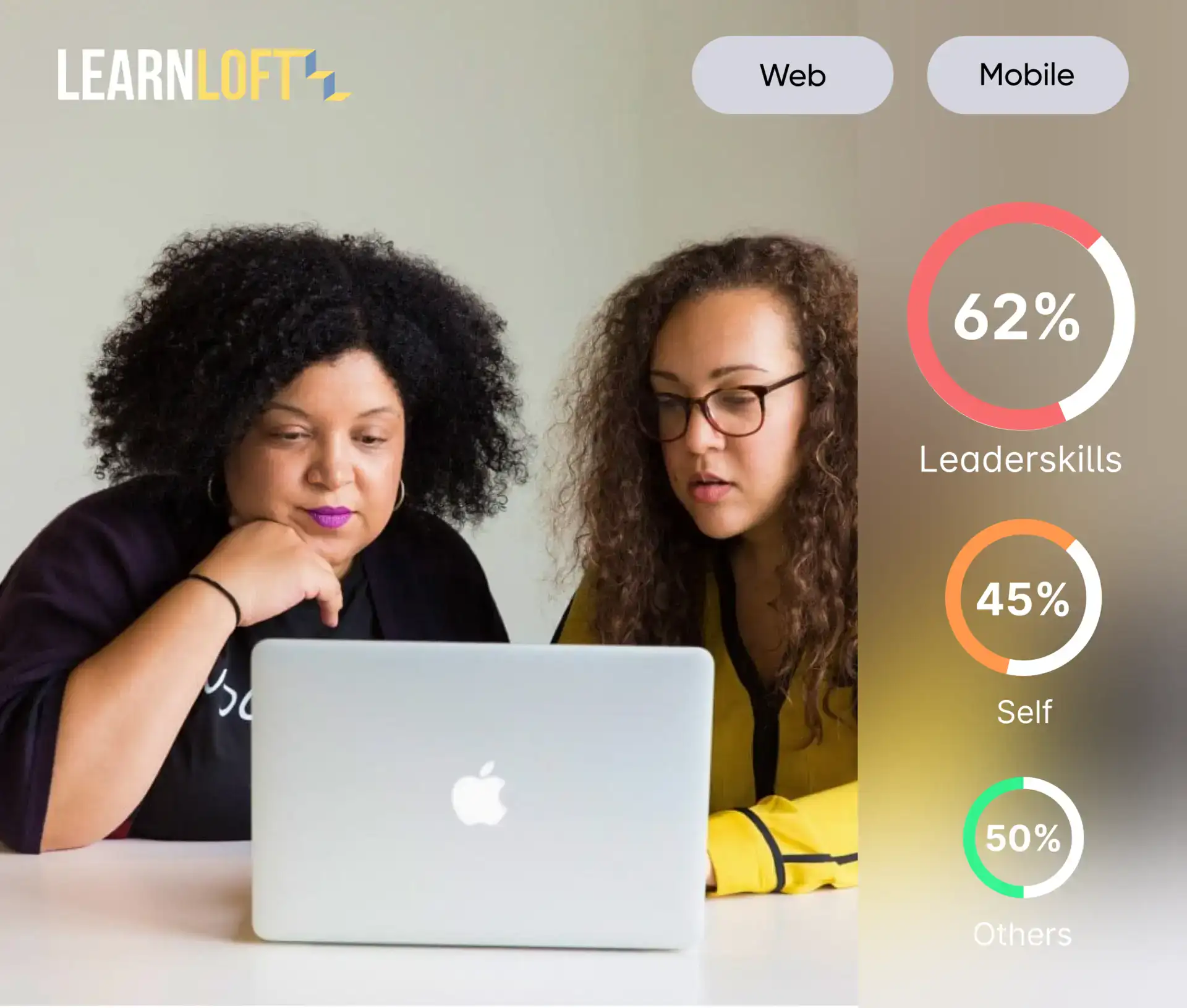
Quokka Labs engineered a SaaS-based talent assessment experience supporting assessments, reporting, analytics, and HR workflows, helping organizations manage high-volume talent evaluation through a unified digital platform.
2M+
Assessments Processed
60%
Faster Evaluation Cycles
.webp)
Being a top-rated SaaS application development company, Quokka Labs build SaaS solutions around the regulatory, operational, data, integration, and customer requirements that shape complex industries, helping organizations modernize workflows while supporting long-term business growth.
Build SaaS platforms around HIPAA, EHR/EMR integration, HL7, FHIR, PHI protection, clinical workflows, patient portals, telehealth, health data exchange, and care coordination.
Engineer financial platforms around PCI DSS, KYC, AML, open banking, payment orchestration, transaction processing, fraud detection, financial APIs, ledger systems, and regulatory reporting.
Power commerce platforms through OMS, PIM, POS integration, inventory synchronization, payment gateways, customer data platforms, recommendation engines, order orchestration, and omnichannel workflows.
Engineer learning platforms around LMS, SIS integration, SCORM, LTI, xAPI, assessment engines, digital classrooms, learning analytics, content management, and role-based access.
Build PropTech platforms supporting property management, MLS integration, lease administration, tenant portals, property listings, digital transactions, document automation, CRM integration, and real-time property analytics.
Connect logistics operations through TMS, WMS, fleet management, route optimization, shipment tracking, EDI, IoT telemetry, geospatial data, warehouse workflows, and real-time event processing.
 Intelligent SaaS Capabilities
 We integrate AI into SaaS products where it can improve how users find information, make decisions, complete workflows, and interact with complex product capabilities.
Embed contextual AI assistants that help users interpret product data, generate insights, complete tasks, and navigate complex workflows within their existing SaaS environment.
Design AI agents that can reason across defined workflows, access authorized systems, execute actions, and automate workflows with multi-step processes with appropriate controls and human oversight.
Connect SaaS products to organizational knowledge through RAG development, vector search, semantic retrieval, embeddings, and permission-aware access for contextual answers grounded in relevant data.
Use OCR, document classification, entity extraction, structured data extraction, and LLM-based processing to convert unstructured documents into usable information and automated workflows.
Apply machine learning to product and operational data for forecasting, capacity planning, risk identification, demand prediction, and proactive decision support.
Enhance conventional search with semantic search, natural-language queries, hybrid retrieval, relevance ranking, and contextual results across complex SaaS data.
Use behavioral signals, tenant context, user roles, and lifecycle data to personalize recommendations, content, and in-product experiences while maintaining controlled access and predictable product behavior.
Add speech-to-text, text-to-speech, conversational AI, and voice workflows that allow users to interact with SaaS applications through natural language.
Detect unusual usage, access patterns, transaction behavior, performance signals, and workflow deviations through machine learning and rules-based monitoring with configurable alerting across critical product workflows.
Put guardrails around production AI through output evaluations, quality monitoring, fallback handling, and per-tenant visibility into token and inference costs.
Quokka Labs builds security and compliance into SaaS architecture from the start, protecting customer data, controlling access, securing integrations, and supporting regulatory requirements across the product lifecycle.
Our team selects technologies around product requirements, workload characteristics, integration needs, security considerations, and long-term evolution rather than forcing every SaaS product into the same technical stack.
 Figma
Figma Quokka Labs brings together product engineering, cloud, AI, security, data, and integration expertise to build SaaS platforms aligned with strategic priorities, complex workflows, and long-term business growth.
We engineer SaaS platforms around the intersection of product value, technical depth, customer workflows, intelligent automation, and sustainable platform economics.
Quokka Labs follows a structured SaaS engineering approach that connects product strategy, architecture, UX, development, security, integrations, and cloud infrastructure to move complex requirements into production-ready platforms.
Map product goals, customer workflows, stakeholder requirements, compliance obligations, commercial assumptions including pricing and packaging models, integration dependencies, and success metrics before architecture decisions lock in future constraints.
Create role-specific interfaces, information architecture, workflows, dashboards, onboarding journeys, administrative controls, and prototypes that reflect real customer tasks and decision paths across complex product environments.
Create role-specific interfaces, information architecture, workflows, dashboards, onboarding journeys, administrative controls, and prototypes that reflect real customer tasks and decision paths across complex customer environments and workflows.
Select backend, frontend, database, cloud, messaging, search, payment, identity, and integration technologies around workload characteristics, product requirements, team expertise, and long-term maintainability without creating unnecessary technology dependencies.
Build core product capabilities through modular engineering, automated CI/CD, code reviews, test automation, tenant controls, billing, and integrations, releasing incrementally against measurable delivery and quality signals.
Validate functionality, security, tenancy, performance, accessibility, integrations, failure handling, backups, recovery procedures, and release behavior through automated and manual quality engineering before production traffic reaches critical workloads.
Launch through controlled environments, pilot releases, observability, documentation, and support workflows, using production signals to guide subsequent product and platform improvements.
Explore perspectives on SaaS architecture, multi-tenancy, cloud engineering, AI integration, application modernization, product economics, security, observability, and technology decisions shaping modern software platforms and products.
This guide explores how oil and gas companies are using modern software development to drive efficiency, safety, and scalability...
Learn how on-demand application development enables real-time service delivery at scale, covering architecture, workflows,...
Discover how Generative AI in product development accelerates innovation across ideation, design, engineering, testing, and...
This guide explores how oil and gas companies are using modern software development to drive efficiency, safety, and scalability...
Learn how on-demand application development enables real-time service delivery at scale, covering architecture, workflows,...
Discover how Generative AI in product development accelerates innovation across ideation, design, engineering, testing, and...
Share your SaaS product idea or platform challenge to start mapping the architecture, tenancy model, integrations, and commercial requirements behind a production-ready platform.
SaaS Architecture Assessment
Evaluate workflows, tenancy, integrations, security, performance, and modernization opportunities before major engineering decisions.
SaaS Engineering Roadmap
Define the technical path across architecture, APIs, data, AI, security, cloud, and deployment.
Specialized SaaS Engineering Expertise
Access specialized expertise across SaaS engineering, AI, data, cloud, integrations, security, and modernization.


A SaaS mobile application development company should cover product strategy, UX, architecture, multi-tenancy, engineering, integrations, security, testing, deployment, observability, and continuous product improvement.
Custom SaaS application development services account for tenant isolation, subscription models, provisioning, shared infrastructure, continuous releases, customer configuration, integrations, analytics, and recurring product evolution.
Multi-tenant SaaS design should address tenant isolation, database strategy, authorization, provisioning, configuration, data residency, observability, scaling, backup, disaster recovery, and tenant-aware security controls.
SaaS applications can integrate through REST APIs, GraphQL, webhooks, event streams, OAuth, SSO, middleware, queues, and data synchronization layers connecting CRM, ERP, payment, identity, and analytics systems.
Yes. SaaS application modernization can use incremental refactoring, API enablement, database modernization, cloud migration, modularization, feature flags, controlled releases, observability, and staged migration to reduce disruption.
Yes. SaaS mobile app development services can extend existing platforms through native or cross-platform applications connected to shared APIs, identity services, workflows, notifications, analytics, and customer data.
A SaaS application development platform can combine React, Next.js, Node.js, Python, PostgreSQL, Redis, AWS, Azure, Google Cloud, Docker, Kubernetes, Terraform, APIs, and AI technologies.
AI can support copilots, RAG, intelligent search, document processing, recommendations, predictive analytics, agentic workflows, anomaly detection, personalization, and workflow automation directly inside SaaS products.
A SaaS development company in USA can provide product engineering, architecture, cloud engineering, security, integrations, QA, DevOps, AI capabilities, and continuous development through distributed multidisciplinary teams.
Evaluate SaaS partners through technical depth, multi-tenancy experience, security practices, delivery predictability, automated testing, deployment maturity, API performance, cloud economics, team composition, and measurable production outcomes.
UG Floor, Tower-4, Assotech Business Cresterra, Plot No.22, Sector-135, Noida, Uttar Pradesh, 201305
111 Congress Avenue Suite 500, Austin,
Texas - 78701
Jasmijnlaan 88, 1187 EL Amstelveen,
Netherlands