Evertest
Quokka Labs engineered an AI-powered, no-code QA automation platform that converts browser interactions into reusable test workflows, reducing scripting overhead and accelerating regression testing cycles.
Quokka Labs engineered Evertest as a unified, AI-powered, no-code test automation platform to address QA bottlenecks caused by repetitive regression testing and fragile automation scripts. The engineering objective was to enable QA engineers, developers, and product managers to create, execute, and maintain automated tests with less scripting overhead, targeting a 70% reduction in test creation time and an 80% reduction in manual QA effort.
Quokka Labs addressed the limitations of script-dependent regression testing by engineering reusable browser workflows, AI-assisted test generation, and automated test documentation.
Repetitive Regression Testing
Repeated regression test execution consumed QA bandwidth, limiting time for release validation and regression analysis.
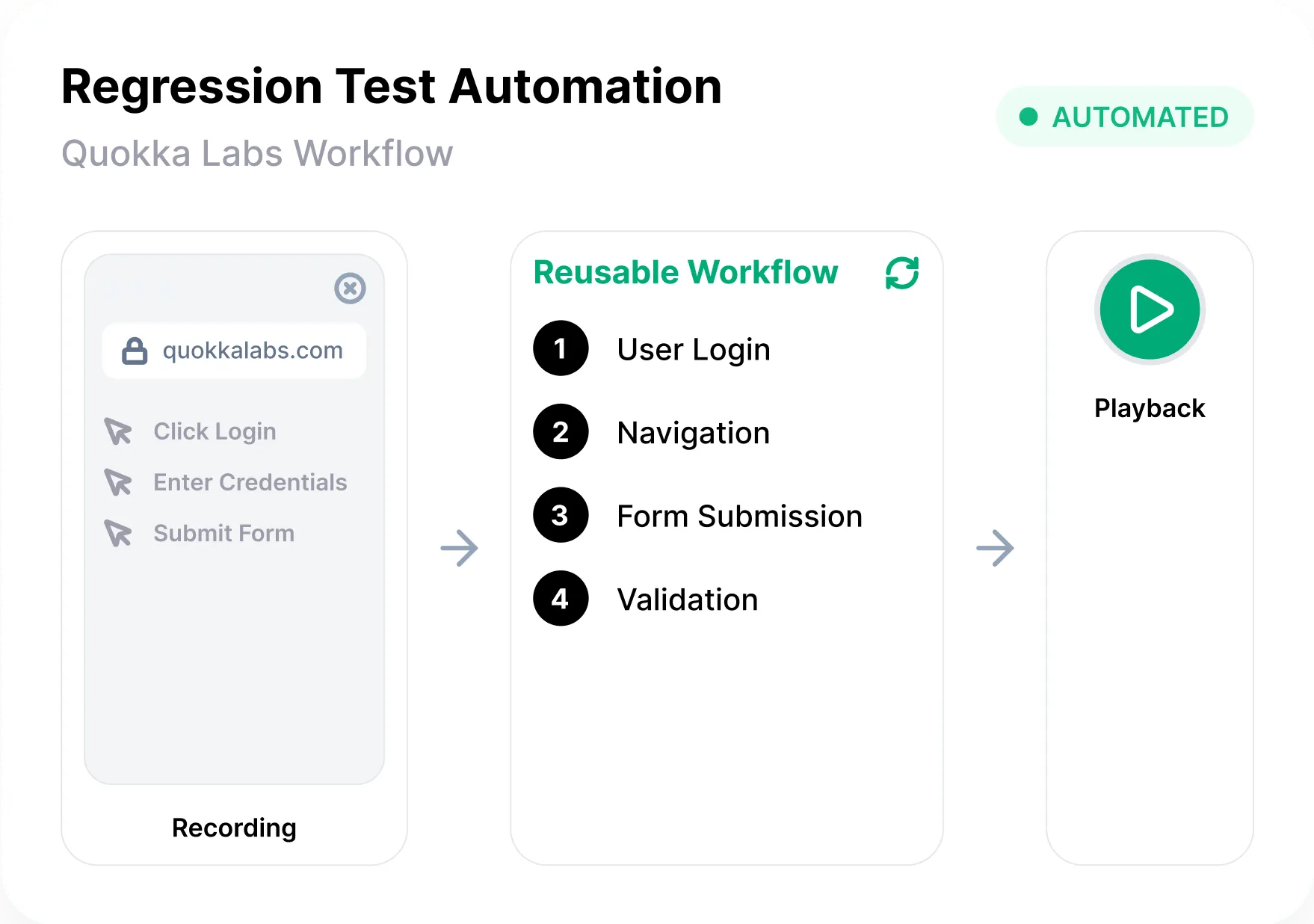
Reusable Regression Test Automation
Quokka Labs engineered browser interaction recording and automated playback to enable repeatable regression testing across established user workflows.
Complex Multi-Tab Workflows
Cross-tab application journeys complicated interaction capture, workflow reproduction, and consistent validation of multi-step user scenarios.
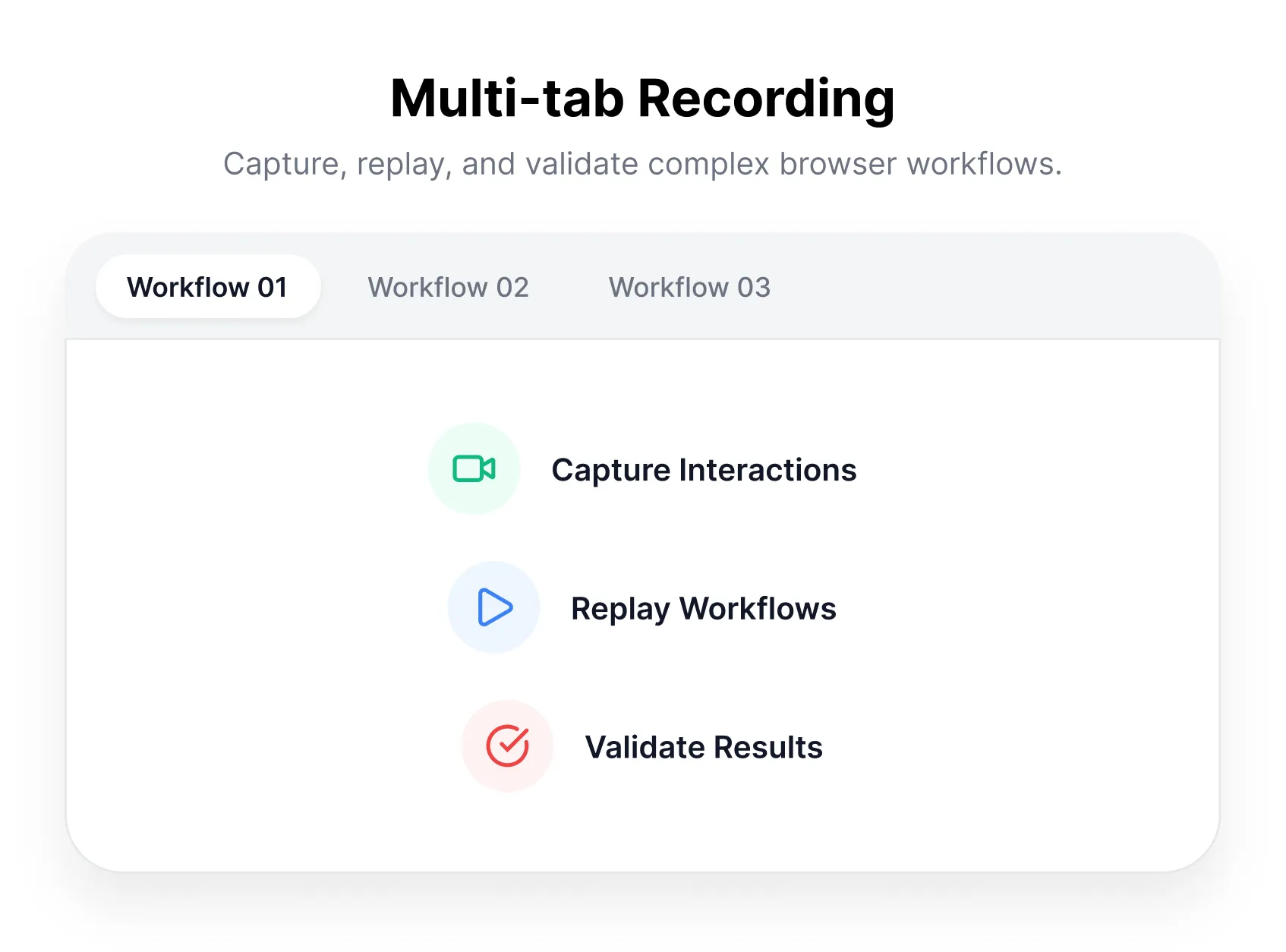
Multi-Tab Browser Workflow Capture
Quokka Labs developed multi-tab recording to capture browser interactions and replay complex workflows for repeatable application validation.
Defining Reliable Test Assertions
Automated workflows needed defined validation criteria to verify interface elements, expected text, input values, and response statuses.
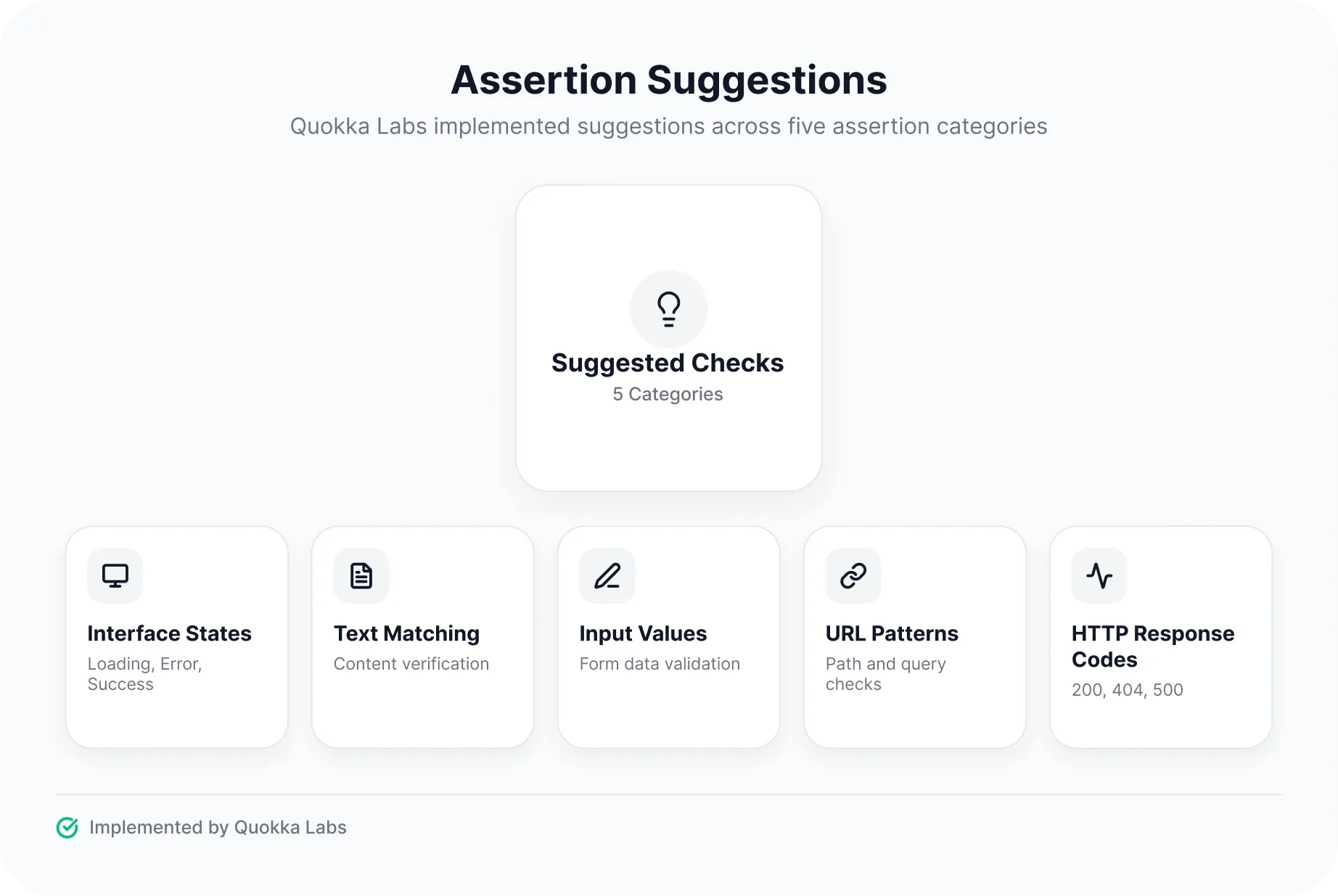
AI-Assisted Test Assertions
Quokka Labs implemented assertion suggestions for interface states, text matching, input values, URL patterns, and HTTP response codes.
Test Breakage After UI Changes
Changes to UI elements and selectors could invalidate existing tests, requiring manual updates to restore reliable execution.
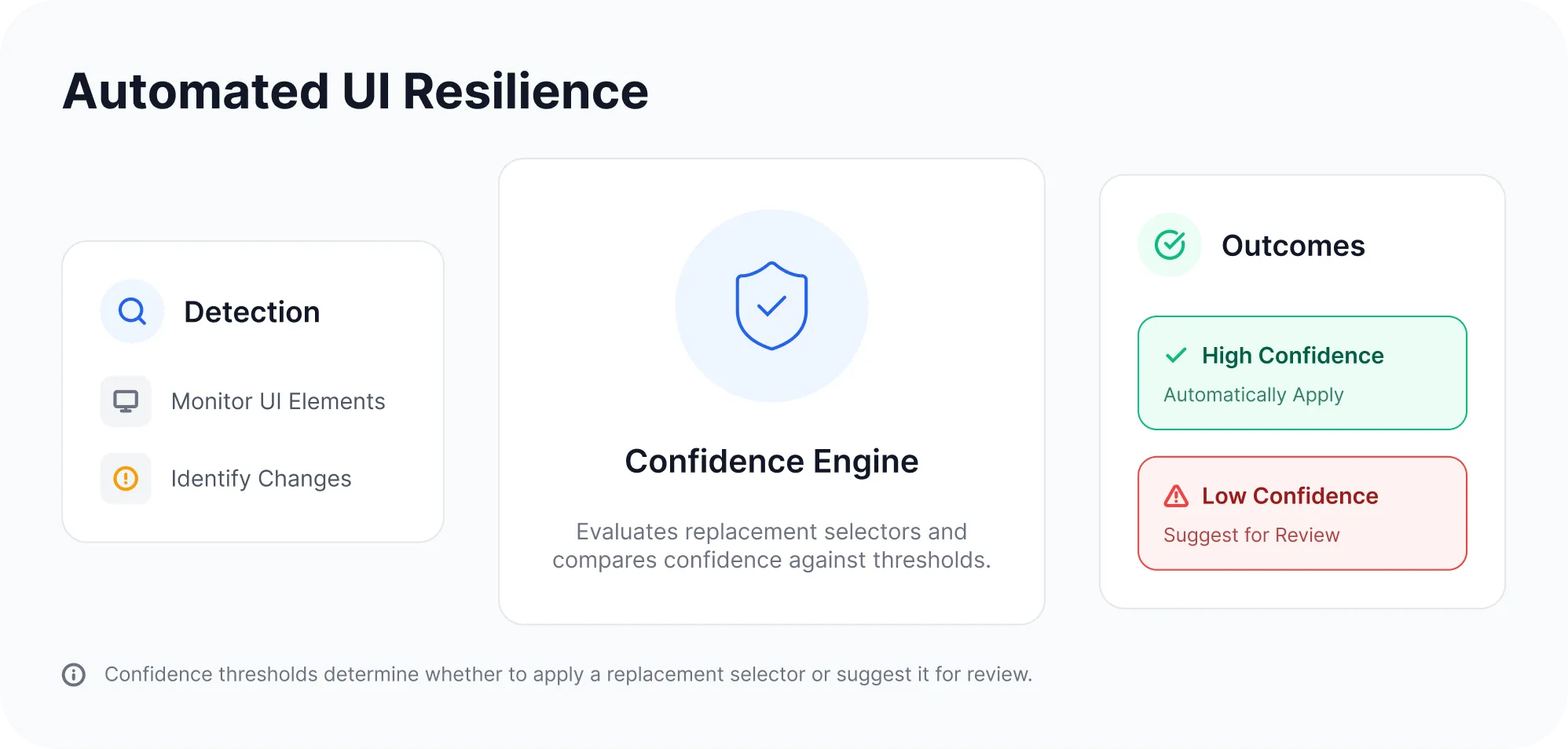
AI-Assisted Test Self-Healing
Quokka Labs implemented self-healing mechanisms to detect changed UI elements and suggest or apply replacement selectors using confidence thresholds.
Gaps in Requirements Traceability
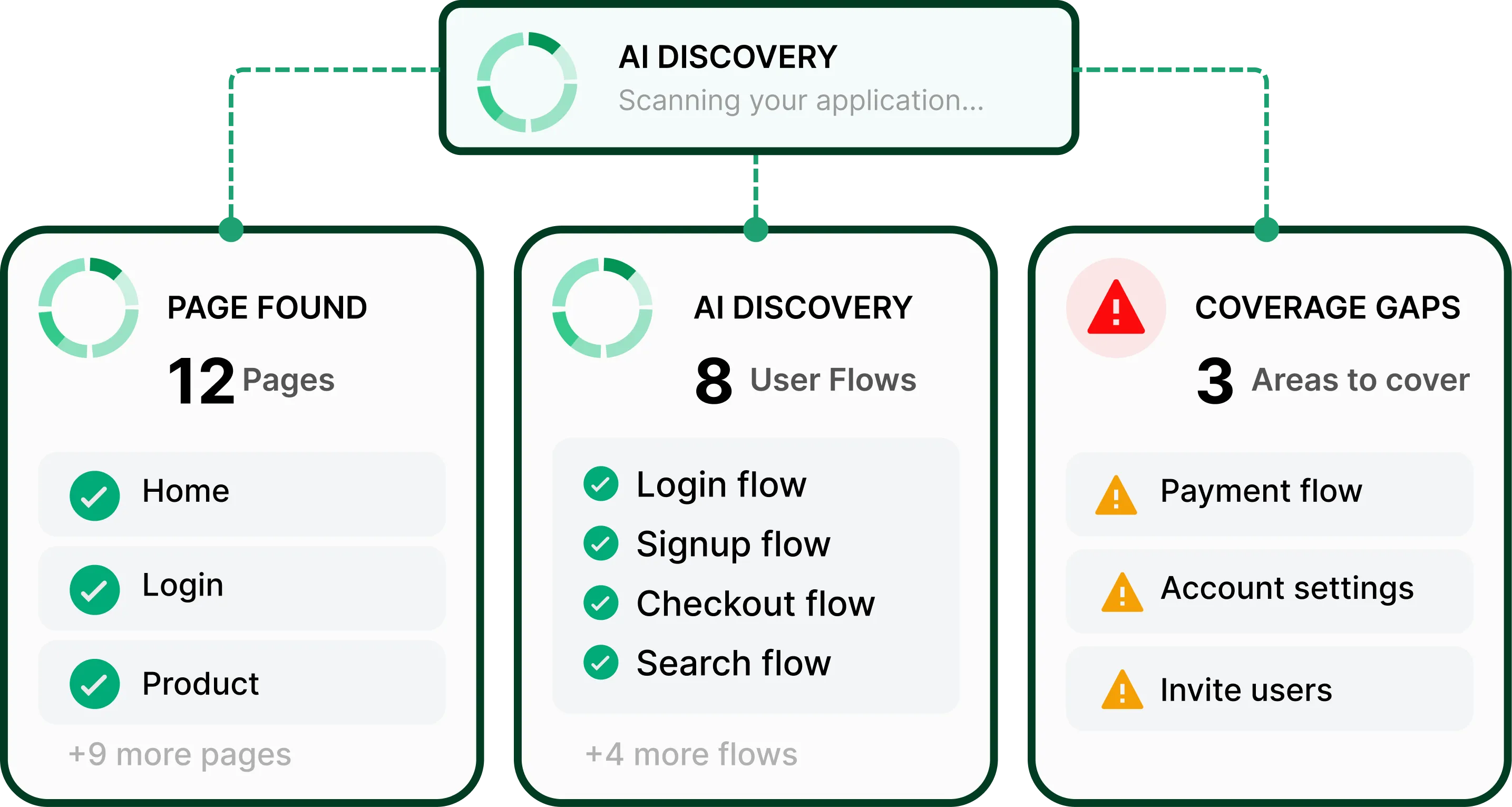
Disconnected requirements and test cases made it difficult to assess coverage gaps and identify requirements without corresponding validation.
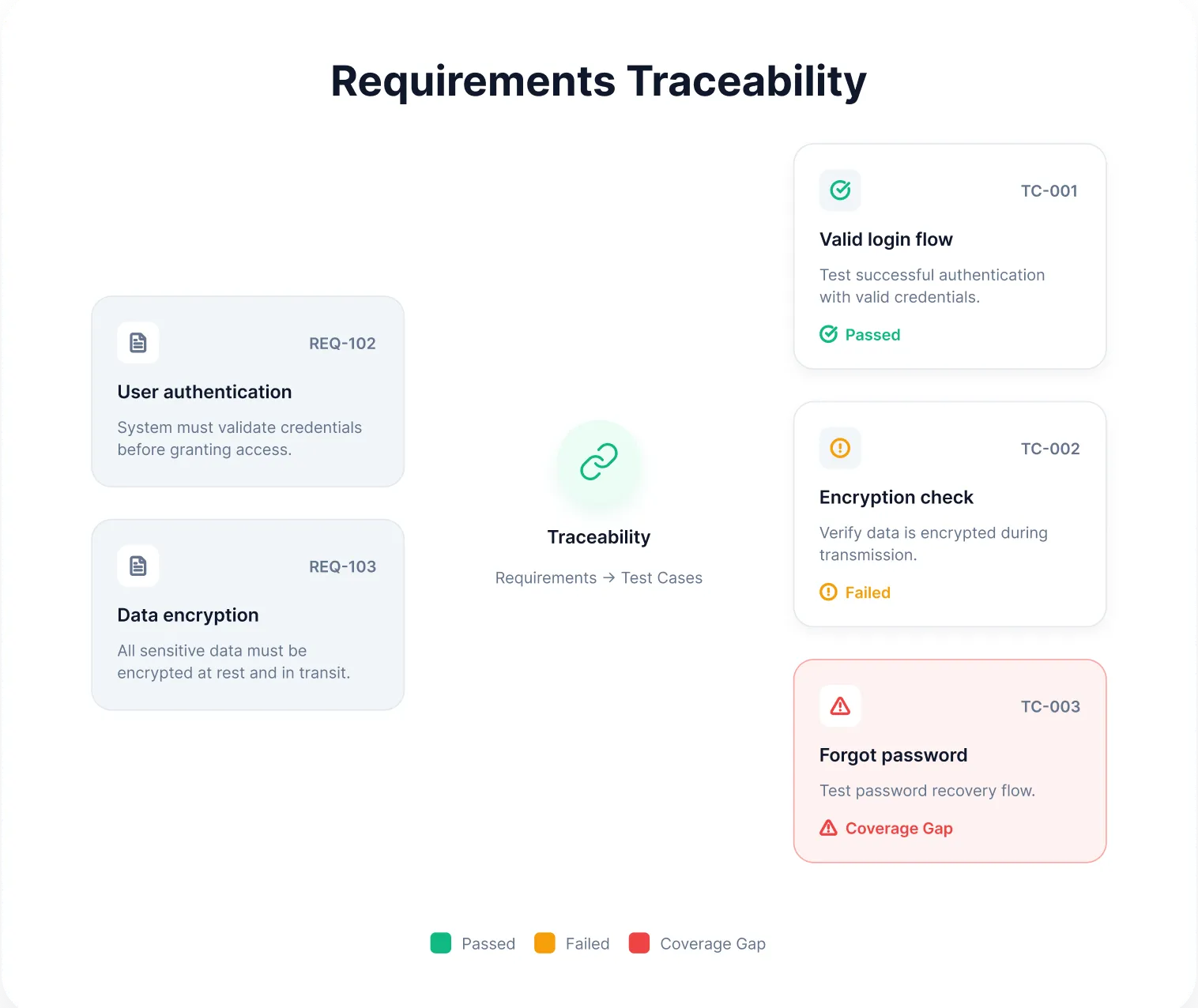
Requirements Traceability Matrix (RTM)
Quokka Labs implemented requirements traceability linking requirements to test cases and execution results, helping teams identify coverage gaps.
We mapped QA requirements into a technical blueprint, covering browser interaction recording, test case generation, automated execution, test data management, and results reporting.
The team developed the browser extension to capture user actions, navigation events, and multi-tab interactions, creating reusable workflows for repeatable regression testing.
Our experts engineered the test generation pipeline to convert natural-language scenarios and recorded sessions into structured test steps, element selectors, and validation assertions.
Our engineers developed the automated test execution workflow to support browser-based testing, cross-browser validation, execution logs, screenshot capture, and test result retrieval.
We connected project data, recorded workflows, and execution results with test documentation and reporting, helping QA teams review outcomes and manage reusable test assets.
Our team integrated the platform's core components and validated test creation, workflow playback, execution, and reporting against defined requirements and acceptance criteria.
ROI Metric
Reduced regression effort and test scripting overhead free QA teams to focus on product quality and faster releases.
Before
Time-Intensive Test Cycles
QA teams repeatedly executed existing tests after application changes, consuming valuable time needed for release validation.
With AI-Powered QA
70% Less Regression Testing Time
Reusable browser workflows and automated test execution streamlined regression cycles and freed time for release validation.
Before
Lengthy Test Preparation
Manually writing and debugging automation scripts increased preparation time and created additional technical overhead.
With AI-Powered QA
70% Faster Test Creation
AI-generated test cases from natural-language scenarios simplified test creation and reduced reliance on manual scripting.
Before
Fragmented Test Documentation
Teams maintained test documentation separately from test creation and execution, making records harder to keep consistent.
With AI-Powered QA
100% Test Documentation Coverage
Automated documentation generation for recorded sessions helped maintain consistent, accessible test records across workflows.
Before
Resource-Intensive Browser Checks
Cross-browser compatibility checks increased testing effort across supported browser environments and application configurations.
With AI-Powered QA
80% Less Cross-Browser Testing Effort
Automated execution across supported browsers simplified compatibility checks and reduced repetitive validation work.
Before
Time-Consuming Failure Analysis
QA engineers manually reviewed execution evidence to identify failure points and determine the cause of test errors.
With AI-Powered QA
50% Faster Test Failure Investigation
Step-level results, screenshots, timestamps, and error messages made failures easier to locate and investigate.
Before
Unstable Test Execution
UI changes invalidated existing selectors, requiring manual test updates and repeated debugging to restore execution.
With AI-Powered QA
60% Fewer Selector-Related Test Failures
AI-driven element matching and confidence-based selector replacement helped tests adapt to interface changes and maintain execution continuity.
Quokka Labs helps businesses modernize software, automate complex workflows, and build AI-powered products that improve productivity and accelerate business growth.
UG Floor, Tower-4, Assotech Business Cresterra, Plot No.22, Sector-135, Noida, Uttar Pradesh, 201305
111 Congress Avenue Suite 500, Austin,
Texas - 78701
Jasmijnlaan 88, 1187 EL Amstelveen,
Netherlands