Automation QA Testing Services Engineered for Faster, More Reliable Software Releases
Quokka Labs engineers scalable automation frameworks that validate application behavior, accelerate regression cycles, improve test coverage, and integrate continuous validation into modern software delivery environments.
Trusted By Teams for Scalable Test Automation and Release Validation
Quokka Labs helps technology leaders modernize testing capabilities, reduce release bottlenecks, and establish measurable automation programs aligned with delivery velocity, software complexity, and quality objectives.
0+
Projects Delivered
0+
Years Software Engineering Experience
0+
Industries Served
0%
Client Retention
Automation Testing Services
Automation QA Testing Services for High-Scale Software Delivery and Release Assurance
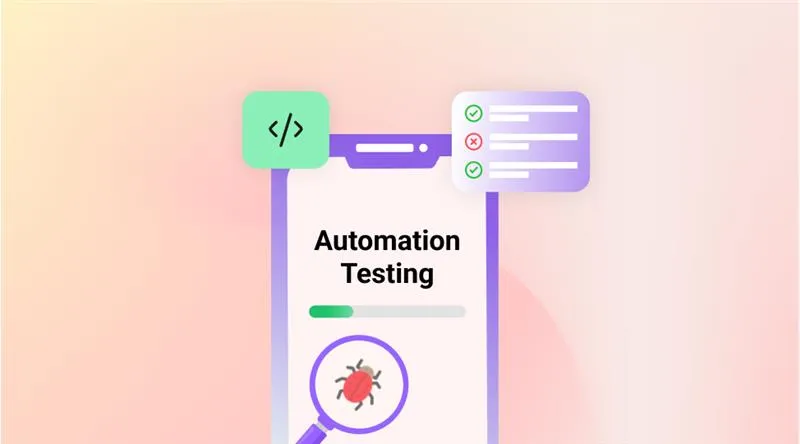
We engineer automation programs that unify functional validation, regression coverage, cross-platform execution, and CI/CD quality gates to improve release predictability, testing efficiency, and software quality.
AI-Powered Test Automation
01
AI-assisted test generation, adaptive maintenance, failure analysis, and intelligent test selection help teams scale automation, reduce script maintenance, and expand test coverage across evolving applications.
Cross-browser validation covers rendering, interaction, compatibility, and behavioral consistency across browser engines, versions, operating systems, and configurations within defined release requirements.
Service and journey-level automation validates APIs, integrations, authentication, business rules, data flows, and system dependencies across interconnected application architectures.
Structured automation validates business rules, functional requirements, application states, workflows, and acceptance criteria with repeatable execution across evolving software releases.
Want to Make Automated Testing Part of Every Release?
Whether you’re looking to integrate automated validation across development and delivery workflows, Quokka Labs can help enforce quality criteria, detect defects earlier, and accelerate release decisions.
Quokka Labs automated validation across mobility workflows, helping teams execute repeatable test scenarios, identify defects earlier, and maintain consistent application behavior across releases.
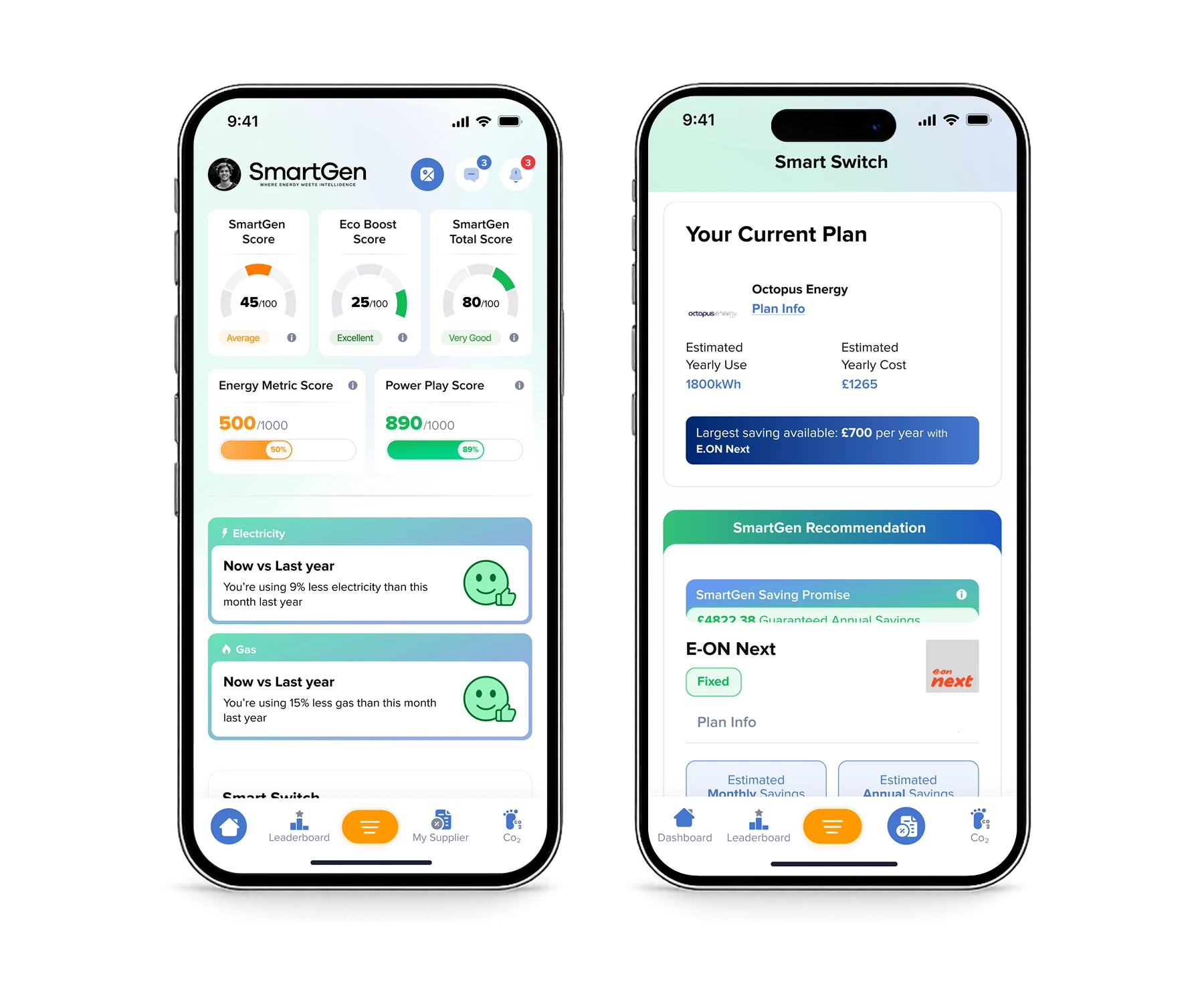
Quokka Labs automated testing across smart-meter connectivity, account journeys, energy insights, recommendations, and data-driven workflows to improve release validation and application reliability.
Securing Automated Validation Across Controlled Software Environments
Our automation practices incorporate controlled test execution, protected credentials, secure data handling, access governance, and compliance-aware validation for applications handling sensitive information.
ISO 27001
SOC 2
HIPAA
PCI DSS
GDPR
CCPA
DPDP Act
ISO 27001
SOC 2
HIPAA
PCI DSS
GDPR
CCPA
DPDP Act
OWASP
SAST
DAST
API Security Testing
Secure SDLC
Threat Modeling & Validation
Dependency Scanning
OWASP
SAST
DAST
API Security Testing
Secure SDLC
Threat Modeling & Validation
Dependency Scanning
CI/CD Validation
Shift-Left Testing
Shift-Right Validation
Test Automation
Continuous Regression Testing
CI/CD Validation
Shift-Left Testing
Shift-Right Validation
Test Automation
Continuous Regression Testing
Performance Testing
Load Testing
Stress Testing
Scalability Validation
Chaos Engineering
Resilience Testing
Performance Testing
Load Testing
Stress Testing
Scalability Validation
Chaos Engineering
Resilience Testing
AWS
Microsoft Azure
Google Cloud
Kubernetes
Docker
Terraform
Microservices
Event-Driven Architectures
AWS
Microsoft Azure
Google Cloud
Kubernetes
Docker
Terraform
Microservices
Event-Driven Architectures
Partner with Us
Why Do Technology Leaders Choose Quokka Labs for QA Automation Services?
Quokka Labs brings together test engineering, automation architecture, CI/CD integration, and AI-assisted quality intelligence to help technology teams scale validation, accelerate releases, and reduce testing overhead.
Automation Framework Expertise
Our framework engineering helps reduce test maintenance and accelerate new test development, giving your teams reusable automation that scales across applications, platforms, APIs, and evolving release requirements.
Intelligent Test Prioritization
By applying risk-based testing and test impact analysis, we help reduce regression execution time by focusing validation on changed, affected, and high-risk functionality.
Flaky Test Elimination
We identify instability at its source to reduce false failures, improve test reliability, and help engineering teams spend less time investigating unreliable automation results.
Scalable Test Architecture
Our modular and distributed architectures enable parallel execution across browsers, devices, environments, and services, helping teams expand coverage without proportionally increasing testing effort.
CI/CD Quality Integration
From pull requests to production deployments, we integrate automated validation with Jenkins, GitHub Actions, GitLab CI/CD , and Azure DevOps to establish automated quality gates throughout delivery.
AI-Assisted Test Intelligence
Our AI-assisted approach can accelerate test creation, prioritization, failure analysis, and maintenance, helping teams increase automation capacity while reducing repetitive engineering effort.
We engineer automation around your application architecture, release cadence, technology stack, testing priorities, and long-term maintenance requirements.
Automation QA Across a Modern Testing Technology Stack
Quokka Labs works across leading automation, API, mobile, performance, CI/CD, and test management technologies to build testing frameworks and workflows aligned with your architecture, platforms, and delivery requirements.
Figma
Our Automation QA Process
How We Turn Testing Requirements Into Scalable Automation
Quokka Labs follows a structured automation QA process that aligns testing with application architecture, release priorities, engineering workflows, and measurable quality objectives.
1
Assess Application & Define Automation Scope
Application architecture, workflows, existing coverage, release cycles, and quality risks are evaluated to identify automation priorities, testing objectives, and suitable execution strategies.
2
Record User Flows & Design Test Scenarios
Critical user flows are identified and analyzed to define test scenarios, reusable test cases, assertions, test data, dependencies, and expected application behavior.
3
Build Reusable Automation Frameworks
Prioritized scenarios are converted into maintainable automated tests using framework patterns, reusable components, robust locators, data management, synchronization, and coding standards.
4
Validate Functional & Integration Layers
Automated validation covers UI workflows, APIs, business rules, integrations, data flows, authentication, and end-to-end journeys to identify defects across interconnected application layers.
5
Execute Parallel & Cross-Platform Testing
Test suites are executed across browsers, devices, environments, and configurations using parallel and distributed execution to expand coverage while reducing overall execution cycles.
6
Integrate Testing Into CI/CD Pipelines
Automated tests are integrated with source control, pull requests, builds, deployments, and CI/CD pipelines to deliver continuous feedback and enforce defined quality gates.
7
Monitor Results & Optimize Automation Performance
Execution results, coverage, failures, flaky tests, maintenance effort, and test trends are analyzed to improve suite stability, optimize test execution, and sustain automation effectiveness.
Ready to Reduce Testing Bottlenecks and Accelerate Software Releases?
Quokka Labs helps reduce testing bottlenecks by scaling automation, shortening validation cycles, increasing test coverage, and integrating quality checks into software delivery workflows for faster releases.
Response within 24 hours
Our automation engineers review your application, testing requirements, framework needs, and execution objectives.
Automation Assessment
Receive recommendations on automation opportunities, framework architecture, execution strategy, coverage priorities, and maintenance requirements.
15+ years of Experience
Engineering software platforms, automation frameworks, cloud applications, APIs, and digital products across diverse technology environments.
Talk to Our Automation QA Experts
Automation QA Testing Services FAQs
What are automation testing services?
Automation testing services use software frameworks, scripts, infrastructure, and execution systems to validate application behavior repeatedly, reducing manual regression effort while improving testing speed, consistency, and coverage.
When should software teams automate testing?
Automation is most valuable for repeatable, regression-heavy, stable, high-frequency, data-intensive, and integration-dependent scenarios where recurring manual execution creates significant testing effort or delays.
Which applications can be tested through automation?
Automation can validate web applications, mobile applications, APIs, microservices, databases, distributed systems, desktop software, cloud platforms , and integrated application workflows across supported environments.
How do you decide what to automate first?
We prioritize scenarios using release frequency, execution repetition, business impact, defect history, technical feasibility, application stability, integration complexity, and expected maintenance requirements.
How does automation testing integrate with CI/CD pipelines?
Automated suites connect with source control, pull requests, build CI/CD pipelines , deployment stages, and quality gates to provide repeatable validation and rapid feedback throughout software delivery.
How do you handle flaky automated tests?
We analyze timing dependencies, synchronization, shared state, test data, infrastructure instability, external dependencies, and locator behavior before applying isolation, stabilization, retry controls, and framework improvements.
How do you measure automation testing ROI?
We evaluate automation ROI through time saved, manual effort reduced, regression-cycle acceleration, coverage expansion, maintenance cost, defect detection, flakiness, and overall testing efficiency.
Can you modernize an existing automation framework?
Yes. We assess framework architecture, test suites, dependencies, execution infrastructure, coverage, flakiness, maintenance burden, and CI/CD integration before defining modernization priorities and migration paths.
How do you scale automated testing across browsers and devices?
We use parallel execution, distributed test infrastructure, browser automation frameworks, device-cloud platforms, environment isolation, test partitioning, and controlled data strategies to scale validation efficiently.
How much of an application should be automated?
There is no fixed percentage that applies to every application. We assess business-critical workflows, regression frequency, stability, technical feasibility, maintenance effort, and risk to determine the right level of automation.











.webp)
.webp)