hero LLM fade image hero LLM fade image
ML and LLM Engineering Services / LLM Fine-Tuning Services

LLM Fine-Tuning Services for Specialized Tasks, Domain Adaptation, and Production AI

Quokka Labs engineers LLM fine-tuning pipelines that adapt foundation models to specialized tasks, domain-specific language, response formats, and instruction-following behavior while evaluating model quality, latency, and inference costs.

hero shape
circle-clip
circle-clip
Trusted by Teams Building Specialized AI
Safehouse Imagine Software PepsiCo Airtel Motherson Rupeek
LLM Fine-Tuning Solutions

LLM Solutions Built to Improve Real-World Business Operations

From governed AI interactions to intelligent QA workflows and conversational assistants, we specialize LLM behavior around domain requirements, structured outputs, workflow context, and application-specific tasks.

AI Governance & Protection Solutions

Adapt AI Behavior Around Security and Policy Requirements

Specialize models for policy-sensitive interactions, risk classification, content controls, and response standards while supporting governed AI workflows with security, monitoring, and audit requirements.

AI-Powered Quality Engineering Solutions

Train AI to Understand Software Testing Workflows

Adapt AI around testing scenarios, workflow sequences, validation criteria, and product behavior to support automated test generation, regression analysis, assertions, and release validation.

AI Chatbots & Conversational Assistants

Specialize Conversations Around Business Context and User Intent

Customize models for domain terminology, conversational patterns, response structures, and user intent while connecting specialized behavior with knowledge retrieval, business systems, and support workflows.

LLM Fine-Tuning Services

LLM Fine-Tuning Services That Improve Specialized Business Workflows

Quokka Labs adapts foundation models to task requirements, domain language, response standards, and specialized workflows to improve model performance, consistency, and instruction adherence while preparing models for production deployment.

01

Supervised Fine-Tuning

Train pretrained models on curated input-output examples to improve task accuracy, response consistency, structured outputs, and adherence to defined requirements across specialized business workflows.

02

Instruction Tuning

Adapt models to interpret instructions consistently, follow task-specific requirements, produce required formats, and respond appropriately to specialized instructions across recurring business and application workflows.

03

Domain-Specific Model Adaptation

Adapt foundation models to domain terminology, domain-specific patterns, document structures, classification tasks, and specialized workflows where general-purpose models require greater task-specific precision.

04

Preference Optimization

Optimize model behavior using preference datasets and techniques such as DPO to reinforce response quality, preferred outputs, communication standards, and behavioral consistency.

05

Fine-Tuning Data Engineering

Engineer training datasets through collection, cleaning, deduplication, annotation, formatting, validation, sampling, and evaluation-set construction to strengthen model learning and downstream performance.

06

Model Evaluation & Optimization

Benchmark adapted models against representative workloads to evaluate accuracy, robustness, latency, throughput, token efficiency, inference cost, and resource utilization, and optimize the model and serving configuration for production deployment.

Client Success Stories

Proven AI Outcomes Across Complex Operational Environments

Explore how we have applied LLM fine-tuning and specialized AI engineering to adapt models for domain-specific requirements, improve workflow performance, and deliver measurable value across critical business functions.

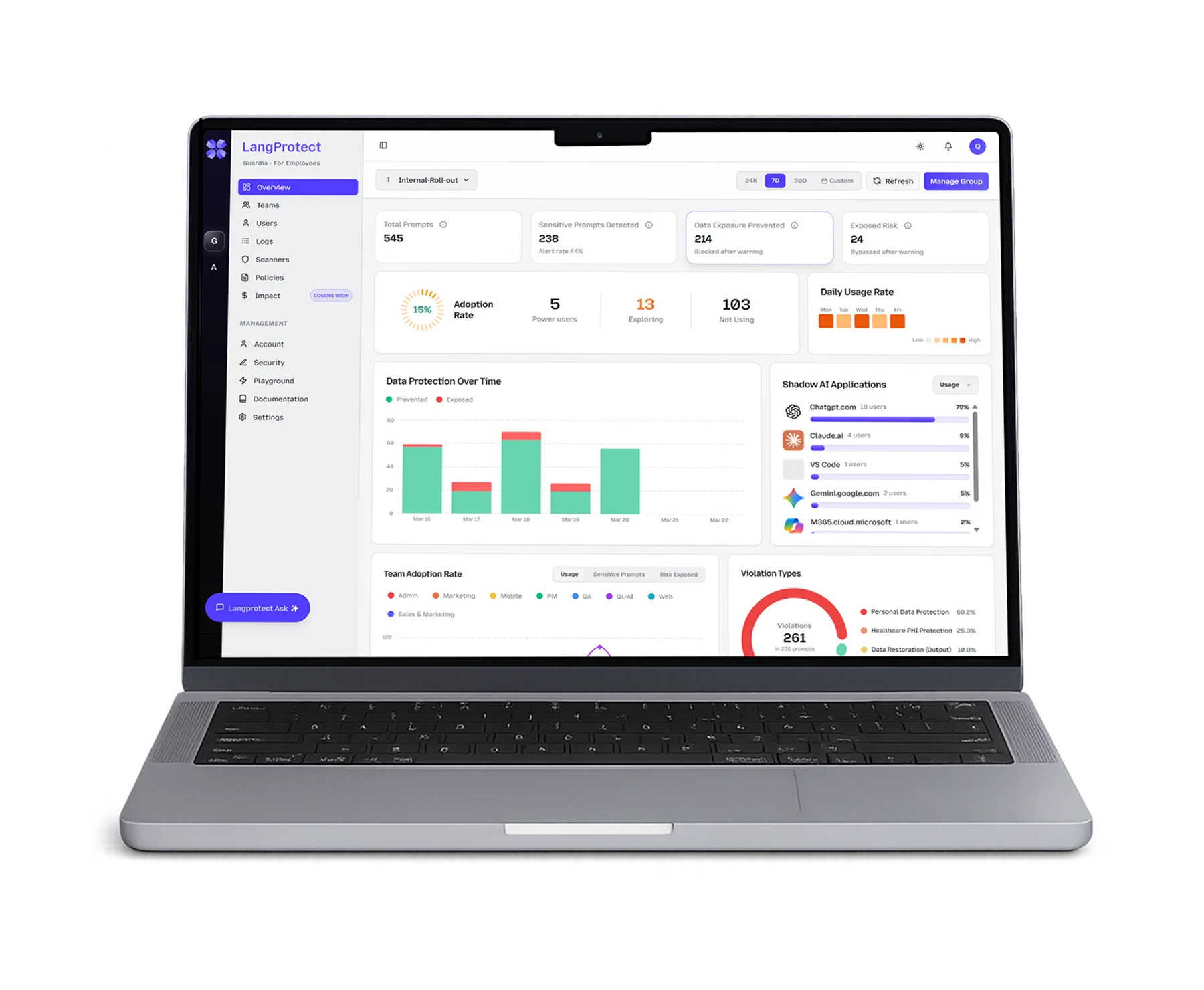
Langprotect

We fine-tuned and engineered LangProtect for specialized LLM security workflows, adapting model behavior to security and governance requirements while integrating AI activity monitoring, runtime controls, and sensitive-data protection for controlled AI operations.

90%

Greater AI Activity Visibility

55%

Faster Governance Response

View Case Study →
Langprotect

Run The Day (RTD)

Run The Day (RTD)

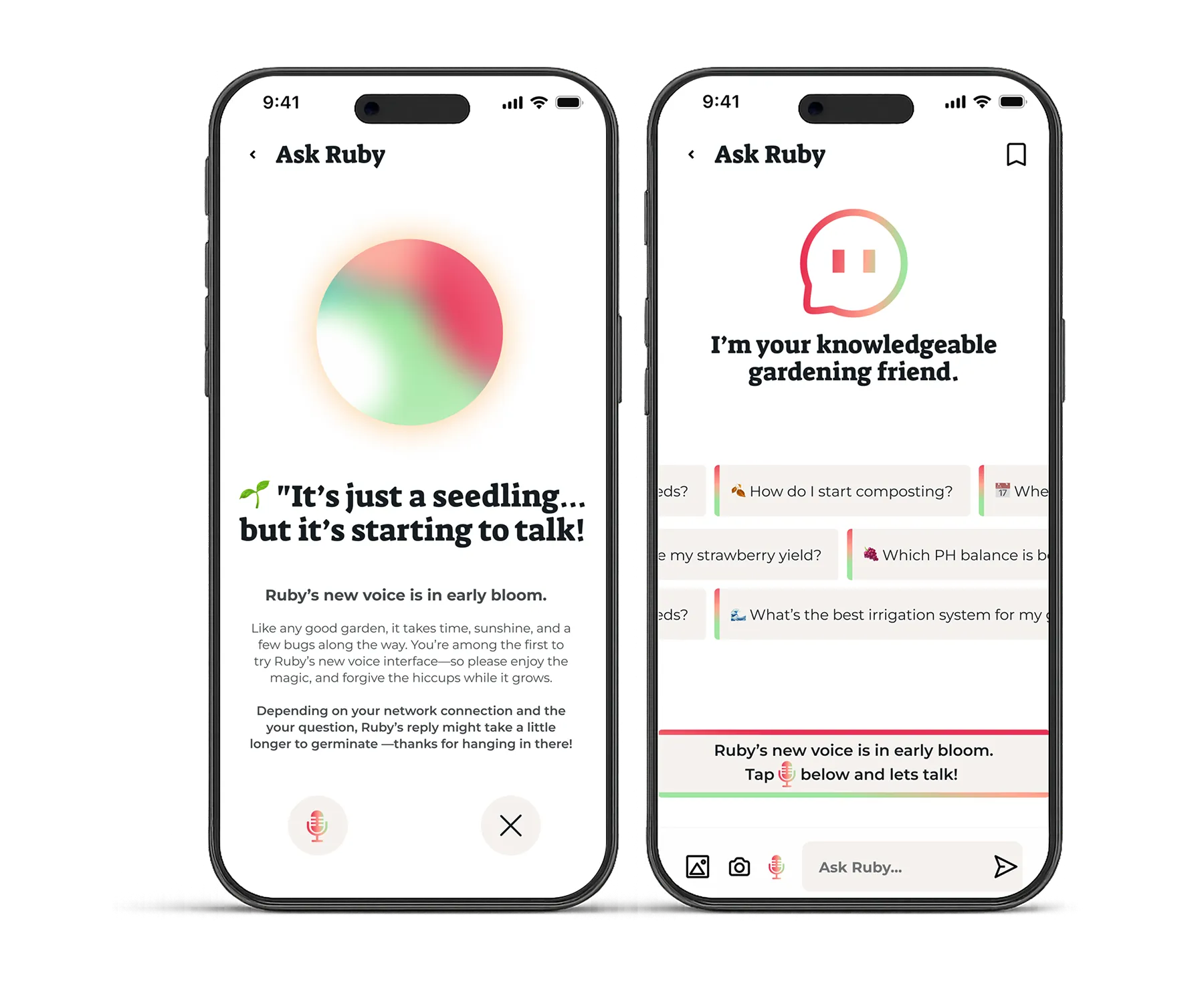
Rhubarb

Rhubarb
LLM Fine-Tuning Process

Our Controlled Approach to LLM Fine-Tuning and Production Deployment

We take models from feasibility assessment and data engineering through controlled adaptation, rigorous evaluation, inference optimization, deployment, monitoring, and continuous performance improvement.

1

Use Case & Model Assessment

Define business objectives, workload requirements, model constraints, data availability, performance thresholds, and deployment considerations while determining whether fine-tuning delivers sufficient value over alternative adaptation approaches.

2

Data Preparation & Curation

Prepare proprietary datasets through cleaning, deduplication, annotation, formatting, quality checks, sampling, and validation to establish high-quality training and evaluation data aligned with target behavior.

3

Fine-Tuning Strategy

Select supervised fine-tuning, LoRA, QLoRA, instruction tuning, or preference optimization according to model architecture, task complexity, compute requirements, performance targets, and deployment constraints.

4

Model Training & Experimentation

Configure training parameters, execute controlled experiments, manage checkpoints, track learning curves, compare runs, and identify model configurations that demonstrate stronger performance against established baselines.

5

Model Evaluation & Validation

Evaluate adapted models against representative workloads using task-specific metrics such as accuracy, F1 where applicable, relevance, robustness, safety, latency, throughput, and cost before approving production deployment.

6

Inference Optimization & Deployment

Optimize inference through quantization, batching, caching, serving configuration, and resource tuning before integrating adapted models with applications, APIs, workflows, and production infrastructure.

7

Monitoring & Continuous Improvement

Monitor model quality, latency, token consumption, inference costs, drift indicators, usage patterns, and evaluation results to identify degradation and guide controlled model updates.

LLM Fine-Tuning Across Industries

Adapting LLMs to Industry-Specific Tasks, Language, and Workflows

+ Healthcare

Adapt models for clinical terminology, clinical documentation, medical coding, utilization review, clinical summarization, and patient communication workflows, with FHIR/HL7 integration and HIPAA-aligned security and data-governance controls implemented at the application and infrastructure layers.

- FinTech

Adapt models for customer onboarding and AML document workflows, fraud analysis, transaction classification, regulatory reporting support, credit documentation, financial research, and risk assessment workflows requiring consistent outputs.

- SaaS

Tune models for technical support, code assistance, API documentation, issue classification, product knowledge, software testing, and structured engineering workflows requiring domain-specific language.

- E-Commerce

Adapt models for product classification, catalog enrichment, review analysis, customer support, merchandising content, query understanding, and conversational commerce across high-volume retail workflows.

- Logistics

Adapt models for shipment documentation, exception classification, procurement correspondence, inventory terminology, carrier communication, order processing, and logistics workflows requiring structured information extraction.

- Education

Fine-tune models for assessment generation, educational content transformation, learner assistance, academic communication, and instructional workflows requiring controlled and contextually appropriate outputs, with RAG used where current curriculum or institutional knowledge is required.

LLM Fine-Tuning With Governance Built Into Every Model Lifecycle

Quokka Labs integrates data protection, access controls, model governance, regulatory requirements, and continuous evaluation across training, deployment, and ongoing model management.

NIST AI RMF
ISO/IEC 42001
ISO/IEC 23894
OECD AI Principles
NIST AI RMF
ISO/IEC 42001
ISO/IEC 23894
OECD AI Principles
OWASP Top 10 for LLM Applications
MITRE ATLASâ„¢
NIST SSDF
NIST SP 800-53
API Security
Secure SDLC
OWASP Top 10 for LLM Applications
MITRE ATLASâ„¢
NIST SSDF
NIST SP 800-53
API Security
Secure SDLC
GDPR
HIPAA
CCPA/CPRA
EU AI Act
DPDP Act
GDPR
HIPAA
CCPA/CPRA
EU AI Act
DPDP Act
MLflow
Arize AI
Fiddler AI
Evidently AI
WhyLabs
LangSmith
MLflow
Arize AI
Fiddler AI
Evidently AI
WhyLabs
LangSmith
OAuth 2.0
OpenID Connect
SSO
RBAC
Encryption
Data Loss Prevention
OAuth 2.0
OpenID Connect
SSO
RBAC
Encryption
Data Loss Prevention
Partner With Us

Why Leaders Trust Quokka Labs for Production-Ready LLM Fine-Tuning

Quokka Labs combines model selection, data engineering, parameter-efficient adaptation, rigorous evaluation, and production optimization to align LLM performance with demanding business requirements and operational objectives.

Model Selection Intelligence

We assess model families against task complexity, context requirements, licensing, deployment flexibility, latency targets, infrastructure needs, and inference economics before recommending an adaptation strategy.

Data Quality Discipline

Our approach transforms proprietary data into high-signal training assets through curation, deduplication, annotation, validation, sampling, and evaluation-set design aligned with intended model behavior.

Parameter-Efficient Adaptation

Where appropriate, we apply PEFT techniques such as LoRA and QLoRA to reduce trainable parameters, memory requirements, experimentation overhead, and infrastructure consumption.

Baseline-Driven Evaluation

Before training begins, we establish baseline performance and measure adapted models against representative workloads using task accuracy, robustness, latency, throughput, cost, and quality metrics.

Model Behavior Optimization

Through controlled experimentation, our engineers optimize response consistency, instruction adherence, structured outputs, domain terminology, preference alignment, and task performance against defined requirements.

Training-to-Production Continuity

Beyond model training, we carry adapted models through inference optimization, deployment, version control, observability, monitoring, controlled releases, and continuous performance improvement.

We engineer fine-tuning around measurable performance, production requirements, and long-term model value.

Technology Choices Engineered Around LLM Performance and Scale

We select training frameworks, model platforms, evaluation tools, inference infrastructure, and deployment technologies around model architecture, workload requirements, performance targets, and infrastructure economics.

Insights & Perspectives

Executive Perspectives on LLM Performance, Adaptation, and Scale

Explore expert perspectives on fine-tuning strategy, model evaluation, training data, inference economics, deployment decisions, and the architecture considerations shaping production LLM initiatives.

Scaling to Billions — Engineering insights

How AI & ML Can Transform The Mobile App Industry?...

To tap into the next move of your users and mold them, artificial intelligence and machine learning services help you attain all the necessary, reliable, and efficient insights...

Future of Autonomous Data Pipelines

Why Top Mobile App Development Companies Are Adopting AI and Machine Learning to Transform App Experiences?...

Endless scrolling, inconsistent and irrelevant features, and recommendations that delay offering support frustrate users. If they can’t get a satisfying experience or response in an ideal timeframe, they become frustrated. As preferences and trends constantly evolve, mobile app development companies are finding new ways to anticipate user expectations...

Reducing Latency by 90% for FinTech

How to Prevent Prompt Injection Attacks in LLMs...

Prompt injection is when untrusted text alters an LLM’s instructions. Prevent it with layered controls: validate/sanitize inputs, gate outputs, isolate tools and data via least privilege, require human approval for risky actions, log and monitor, and enforce AI security governance across development, deployment, and operations...

Scaling to Billions — Engineering insights

How AI & ML Can Transform The Mobile App Industry?...

To tap into the next move of your users and mold them, artificial intelligence and machine learning services help you attain all the necessary, reliable, and efficient insights...

Future of Autonomous Data Pipelines

Why Top Mobile App Development Companies Are Adopting AI and Machine Learning to Transform App Experiences?...

Endless scrolling, inconsistent and irrelevant features, and recommendations that delay offering support frustrate users. If they can’t get a satisfying experience or response in an ideal timeframe, they become frustrated. As preferences and trends constantly evolve, mobile app development companies are finding new ways to anticipate user expectations...

Reducing Latency by 90% for FinTech

How to Prevent Prompt Injection Attacks in LLMs...

Prompt injection is when untrusted text alters an LLM’s instructions. Prevent it with layered controls: validate/sanitize inputs, gate outputs, isolate tools and data via least privilege, require human approval for risky actions, log and monitor, and enforce AI security governance across development, deployment, and operations...

Trusted by Teams Building and Scaling Production AI Capabilities

Quokka Labs combines AI, ML, data, and product engineering expertise to help organizations translate complex technology requirements into scalable capabilities and measurable business value.

0+

Years of Engineering Excellence

0+

AI Models Deployed & Integrated

0+

Engineers, Architects & AI Specialists

0+

Industries Served

Start Your LLM Initiative

Ready to Engineer LLM Performance Around Your Business Priorities?

Whether you're evaluating fine-tuning feasibility or preparing a model for production, Quokka Labs helps assess data, select adaptation strategies, validate performance, optimize inference, and plan deployment.

Fine-Tuning Feasibility Assessment

Evaluate model suitability, data readiness, workload requirements, and performance objectives before investment.

Model Performance Roadmap

Define adaptation strategy, evaluation criteria, optimization priorities, and deployment requirements around measurable goals.

Training-to-Production Model Engineering

Align inference efficiency, security controls, deployment architecture, and lifecycle management with business objectives.

ISO9001 ISO27001 Clutch Goodfirms Designrush

Talk to LLM Fine-Tuning Experts

  • Please Select
  • Search Engine
  • AI Assistant
  • Social Media
  • Referral
  • Other

CONFIDENTIAL SUBMISSION · NDA AVAILABLE · RESPONSE WITHIN 24 HOURS

LLM Fine-Tuning Services FAQs

What is LLM fine-tuning?

LLM fine-tuning adapts a pretrained language model using task-specific examples to improve its behavior, domain understanding, response consistency, and performance for defined workloads.

When should you fine-tune an LLM?

LLM fine-tuning adapts a pretrained language model using task-specific examples to improve its task performance, behavior, response consistency, and adherence to domain-specific requirements for defined workloads.

What is the difference between LLM fine-tuning and RAG?

Fine-tuning changes model behavior through additional training, while RAG supplies external information at inference time. Many applications benefit from combining both approaches.

What is supervised fine-tuning?

Supervised fine-tuning trains a pretrained model using curated input-output examples that demonstrate the desired task behavior, response structure, and instruction adherence.

What are LoRA and QLoRA in LLM fine-tuning?

LoRA and QLoRA are parameter-efficient fine-tuning techniques that reduce trainable parameters and memory requirements compared with updating an entire model.

How much data is required for LLM fine-tuning?

There is no universal dataset size. Requirements depend on task complexity, model architecture, behavioral objectives, example quality, output variability, and evaluation requirements.

How do you evaluate a fine-tuned LLM?

We establish a baseline and evaluate the adapted model against representative workloads using task-specific quality, accuracy, robustness, latency, throughput, and cost metrics.

Can fine-tuning reduce LLM inference costs?

Potentially. A smaller model fine-tuned for a narrow workload may achieve the required performance with lower latency, compute requirements, and inference costs. However, fine-tuning itself does not inherently reduce inference cost.

Can you fine-tune open-weight LLMs?

Yes. Open-weight models can be adapted using supervised fine-tuning, LoRA, QLoRA, instruction tuning, preference optimization, and other techniques based on workload requirements.

Can fine-tuned LLMs be deployed in private environments?

Yes. Depending on model licensing and infrastructure requirements, fine-tuned models can be deployed across private cloud, controlled cloud, or on-premises environments.