AI Agent Consulting for Secure, Production-Ready AI
Quokka Labs helps organizations identify where AI agents can automate work, accelerate execution, and improve decision consistency across complex workflows. We define the agent strategy, autonomy model, architecture, integrations, evaluation framework, governance, and AgentOps required for secure, production-ready deployment.
Enterprise AI Solutions Engineered for Secure, Intelligent Operations
Extend your AI agent strategy with governed assistants, autonomous QA, and secure deployment architectures that reduce operational overhead, accelerate release cycles, and strengthen enterprise-wide AI control.
Enterprise AI Chatbots & Assistants
Turn Enterprise Knowledge into Context-Aware Action
Engineer secure AI assistants using RAG, semantic retrieval, tool calling, memory, and enterprise integrations to automate support, knowledge discovery, employee workflows, and complex multi-turn interactions.
Accelerate Releases with Intelligent Test Orchestration
Apply AI agents to generate test cases, analyze requirements, prioritize regression suites, detect anomalies, and automate defect triage across CI/CD pipelines, increasing coverage while reducing repetitive QA effort.
Operationalize AI Without Compromising Enterprise Control
Deploy production AI with RBAC, policy enforcement, PII protection, audit trails, model evaluation, runtime guardrails, observability, and human-in-the-loop controls aligned with enterprise security and compliance requirements.
AI Agent Consulting for Controlled Autonomy and Production Reliability
Quokka Labs helps enterprises and startups determine where agents can reduce operating effort, accelerate task execution, and improve decision consistency. Our consultants define the architecture, autonomy model, integrations, evaluation standards, governance controls, and operating framework required for dependable enterprise deployment.
01
Agent Use-Case & Value Assessment
Evaluate workflows against task complexity, process volume, data readiness, decision risk, integration effort, and expected returns. We identify where an AI agent is appropriate and where deterministic automation or human execution remains the better choice.
02
Autonomy & Human Oversight Design
Define what agents may recommend, decide, execute, or escalate. We establish approval gates, confidence thresholds, exception paths, fallback behavior, and accountability for business-critical actions.
03
Agentic Architecture Advisory
Design single-agent or multi-agent architectures across planning, memory, state, retrieval, tool use, and orchestration. Recommendations balance performance, resilience, maintainability, latency, and architectural complexity.
04
Enterprise Tool & Data Integration
Define secure access to ERP, CRM, APIs, databases, knowledge platforms, workflow systems, and MCP environments. Integration blueprints preserve identity context, permissions, transaction integrity, and system-of-record ownership.
05
Model Strategy & Agent Economics
Evaluate foundation models, routing strategies, context requirements, token usage, inference latency, and infrastructure costs. We define a model architecture that supports task performance without creating unsustainable operating expenditure.
06
Agent Evaluation & Reliability Engineering
Establish representative evaluation datasets and production scorecards for task completion, groundedness, tool-call accuracy, escalation, recovery, latency, and cost per successful outcome.
07
Agent Security & Runtime Governance
Design agent identity, least-privilege tool access, data boundaries, prompt-injection controls, audit logging, kill switches, policy enforcement, and human approval requirements for governed execution.
08
AgentOps & Production Readiness
Define CI/CD gates, version control, tracing, monitoring, incident response, ownership models, service-level objectives, and rollout criteria. This creates a controlled path from agent prototype to reliable production operation.
AI Agents Consulting Portfolio
Production AI Agents Engineered for Measurable Operational Outcomes
Explore how Quokka Labs applies RAG, contextual memory, NLP, and real-time orchestration to accelerate task execution, reduce workflow errors, and increase adoption across production environments.
Run The Day
Quokka Labs engineered a RAG-enabled agentic support layer combining NLP, contextual memory, domain knowledge retrieval, and real-time troubleshooting to streamline race registration, pricing, timing, and fundraising.
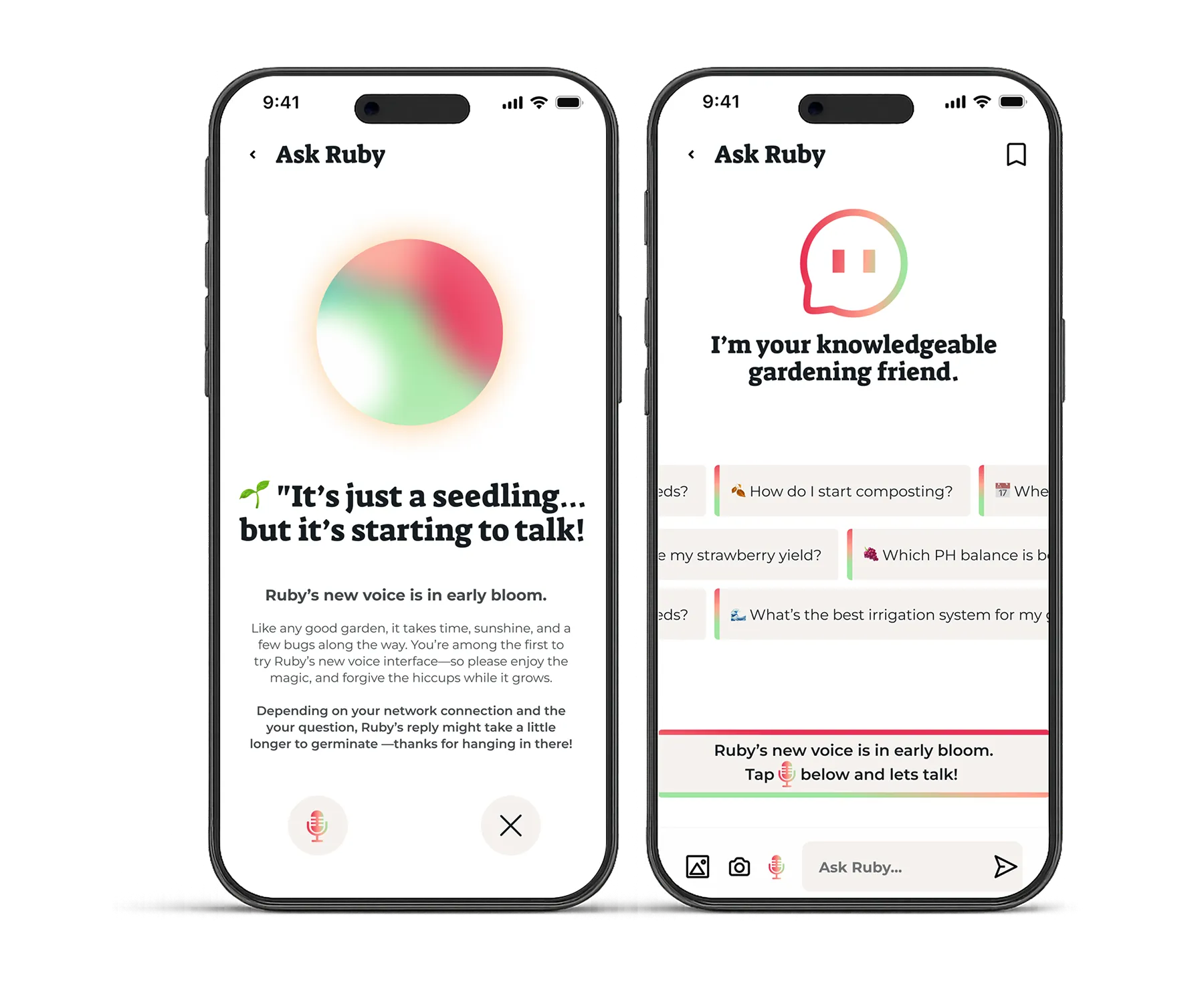
Quokka Labs engineered Ruby, a context-aware agentic assistant that delivers hyper-local guidance, predictive alerts, personalized care routines, and automated task notifications through specialized agents and conversational AI.
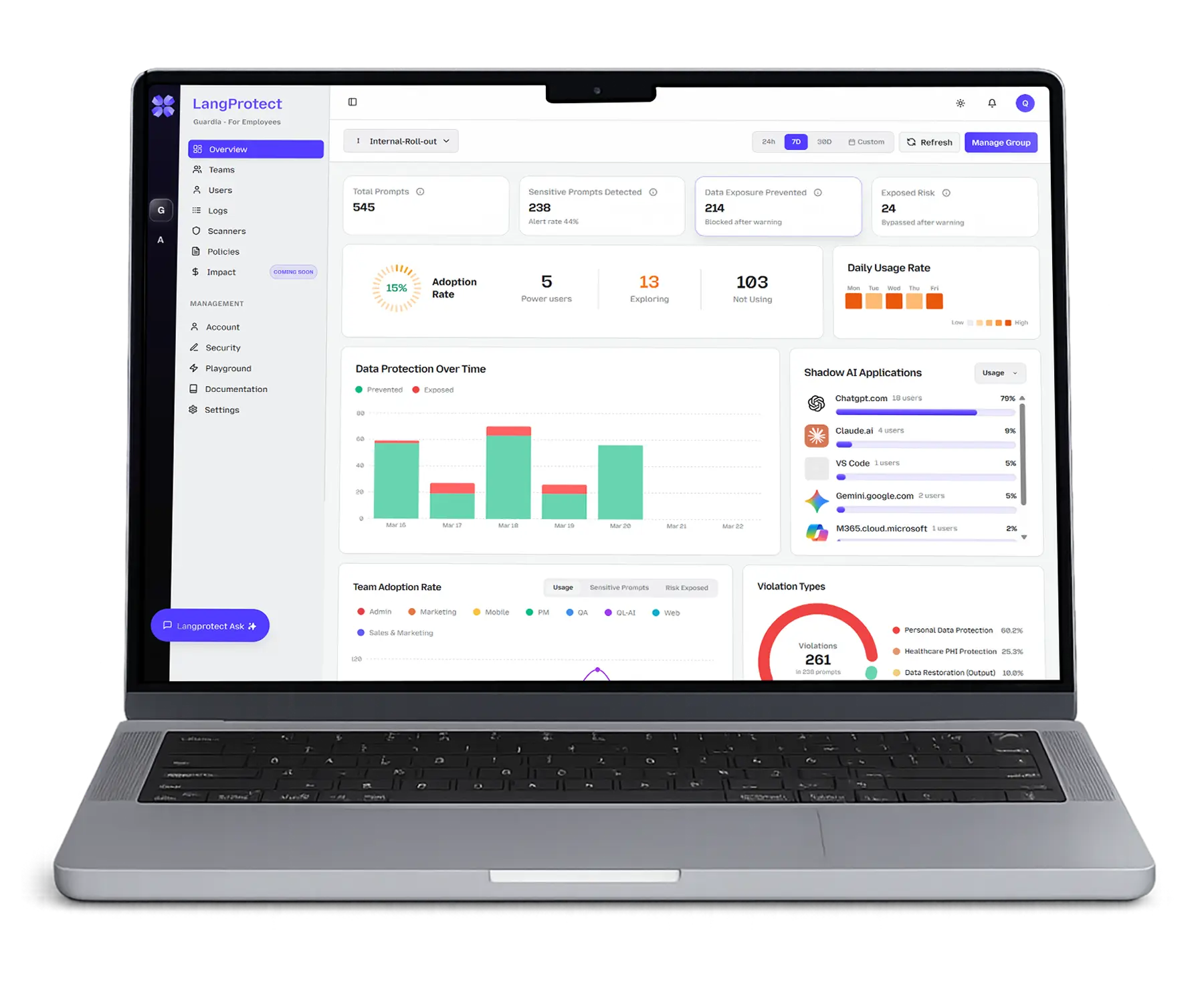
Quokka Labs developed an enterprise governance layer that secures AI applications, agents, and MCP environments through prompt-injection defense, PII/PHI protection, runtime policy enforcement, and audit-ready controls.
Quokka Labs uses an evidence-led consulting framework to validate business value, autonomy, architecture, reliability, security, and operating ownership before an AI agent enters production. Every stage ends with a clear decision to proceed, redesign, constrain, or stop.
1
Agent Opportunity Framing
We map the workflow, user roles, decision points, transaction volumes, exceptions, and current performance baseline. This determines whether the requirement needs an AI agent, deterministic automation, decision support, or a human-led process.
2
Autonomy & Control Design
We define what the agent may access, recommend, execute, approve, or escalate. Tool permissions, data boundaries, human checkpoints, fallback routes, and accountability are established before technical design begins.
3
Agent Architecture Sprint
Our consultants define the single-agent or multi-agent topology across foundation models, RAG, memory, state, orchestration, APIs, MCP tools, identity, and runtime infrastructure. Build, buy, and model-routing decisions are resolved against enterprise constraints.
4
Evaluation & Risk Engineering
We create representative test scenarios covering task completion, tool-call accuracy, unsafe actions, prompt injection, exception handling, latency, and cost. Acceptance thresholds become formal gates for further investment.
5
Controlled Production Proof
A bounded agent is tested with production-like data, integrations, permissions, and failure conditions. This validates operational performance, recovery behaviors, human escalation, user adoption, and cost per successful task.
6
Deployment & AgentOps Blueprint
We define CI/CD controls, evaluation gates, distributed tracing, version management, runtime policies, incident response, service-level objectives, ownership, and phased rollout. Performance and value metrics determine where agents should scale, improve, or be retired.
Deploy HIPAA-aligned agents for clinical documentation, patient engagement, care coordination, knowledge retrieval, and administrative automation with auditable human-in-the-loop controls.
Deploy HIPAA-aligned agents for clinical documentation, patient engagement, care coordination, knowledge retrieval, and administrative automation with auditable human-in-the-loop controls.
Implement AI agents for product discovery, conversational commerce, inventory intelligence, order management, customer support, and personalized lifecycle engagement across omnichannel ecosystems.
Operationalize multi-agent systems for service delivery, engineering support, enterprise knowledge management, shared-services automation, and cross-functional workflow orchestration at global scale.
Automate shipment coordination, route exception handling, demand forecasting, carrier communication, and operational decisioning through real-time agent orchestration and system integrations.
Modernize citizen services, case management, document processing, policy retrieval, and administrative workflows using secure, explainable AI agents with role-based access and governance.
Enterprise-Grade AI Agents Built for Secure, Compliant, and Governed Autonomy
Quokka Labs embeds zero-trust architecture, policy-driven controls, continuous assurance, and end-to-end observability into agentic systems - protecting enterprise data and enabling resilient, auditable AI operations across regulated environments.
HIPAA
SOC 2
ISO 27001
PCI DSS
GDPR
CCPA/CPRA
DPDP Act
EU AI Act
HIPAA
SOC 2
ISO 27001
PCI DSS
GDPR
CCPA/CPRA
DPDP Act
EU AI Act
Consent Management
Data Minimization
PII Redaction
Data Residency
Retention Controls
DLP
Encryption
Data Lineage
Consent Management
Data Minimization
PII Redaction
Data Residency
Retention Controls
DLP
Encryption
Data Lineage
OWASP LLM Top 10
MITRE ATLAS
NIST SSDF
Secure SDLC
DevSecOps
SAST
DAST
SCA
API Security
OWASP LLM Top 10
MITRE ATLAS
NIST SSDF
Secure SDLC
DevSecOps
SAST
DAST
SCA
API Security
NIST AI RMF
ISO/IEC 42001
Risk Classification
Model Evaluation
Explainability
Audit Evidence
Human Oversight
Policy-as-Code
NIST AI RMF
ISO/IEC 42001
Risk Classification
Model Evaluation
Explainability
Audit Evidence
Human Oversight
Policy-as-Code
SSO
OAuth 2.0
OpenID Connect
SAML
MFA
RBAC
SCIM
Least-Privilege Access
Okta
Auth0
SSO
OAuth 2.0
OpenID Connect
SAML
MFA
RBAC
SCIM
Least-Privilege Access
Okta
Auth0
AWS
Microsoft Azure
Google Cloud
Kubernetes
Docker
Terraform
Network Isolation
KMS/HSM
Secrets Management
AWS
Microsoft Azure
Google Cloud
Kubernetes
Docker
Terraform
Network Isolation
KMS/HSM
Secrets Management
Distributed Tracing
Prompt Monitoring
Tool-Call Logging
SIEM Integration
Drift Detection
Guardrails
Kill Switches
Incident Response
Distributed Tracing
Prompt Monitoring
Tool-Call Logging
SIEM Integration
Drift Detection
Guardrails
Kill Switches
Incident Response
WCAG
ADA
Section 508
Automated Evaluation
Adversarial Testing
Red-Teaming
Bias Testing
Regression Testing
CI/CD
WCAG
ADA
Section 508
Automated Evaluation
Adversarial Testing
Red-Teaming
Bias Testing
Regression Testing
CI/CD
Enterprise AI Agents Consulting Expertise
Enterprise AI Agent Consulting Expertise for Reliable, Governed Deployment
Quokka Labs combines value-led strategy, product engineering, vendor-neutral architecture, secure integration, evaluation, and AgentOps to launch dependable AI agents and continuously improve their business performance.
Agent Decision Engineering
We translate business policies, workflow states, decision rights, and escalation rules into explicit agent behavior. Each engagement defines when an agent may act independently, request approval, invoke a deterministic service, or transfer control to a human.
Failure-Mode Architecture
We design for incomplete context, failed tool calls, conflicting instructions, unavailable systems, and low-confidence outputs. State recovery, checkpoints, timeouts, retries, fallback models, and kill switches prevent individual failures from becoming operational incidents.
Enterprise Context Engineering
Agents are grounded in the systems and knowledge required to perform their role. We design permission-aware RAG, memory boundaries, metadata filtering, identity propagation, tool contracts, and source traceability across enterprise data environments.
Evaluation & Agent Economics
Reliability is measured against successful business execution rather than model output alone. We benchmark task completion, tool accuracy, escalation quality, latency, recovery, human intervention, and cost per completed workflow before scale decisions are made.
Composable Agent Architecture
Model providers, prompts, memory, orchestration, retrieval, tools, and observability remain independently replaceable. This supports task-based model routing, controlled experimentation, deployment flexibility, and lower exposure to platform lock-in.
Agile AgentOps Delivery
Delivery progresses through architecture sprints, evaluation baselines, controlled prototypes, security gates, and phased production releases. CI/CD, tracing, version control, runtime policies, incident ownership, and continuous evaluation remain part of the operating model after launch.
Quokka Labs helps enterprises and startups define not only what an AI agent can do, but also when it should act, how its decisions are verified, how failures are contained, and how performance is governed throughout production.
Technology Stack for AI Agent Engineering, Orchestration & AgentOps
Our technology stack combines leading AI models, orchestration, enterprise data, secure infrastructure, and AgentOps to build reliable, governed, and cost-efficient AI agents at production scale.
OpenAI
AI Agent Consulting Insights
AI Agent Insights for Secure, Scalable Automation
Explore agent architecture, evaluation, governance, and AgentOps strategies that accelerate production deployment, improve task reliability, reduce inference costs, and strengthen operational control across enterprise environments.
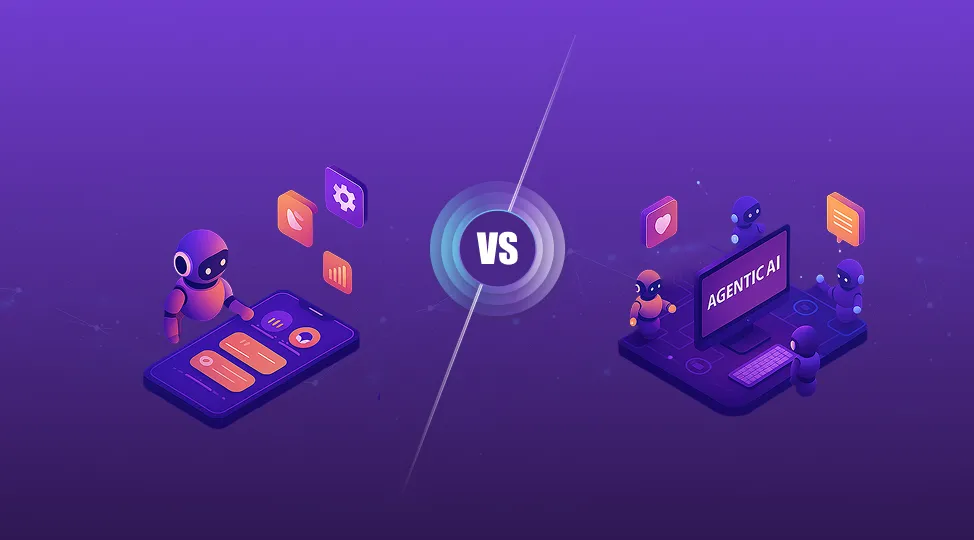
AI Agents vs. Agentic AI: What’s the Difference and Why It Matters
AI agents tackle defined tasks, while Agentic AI brings higher autonomy, collaboration, and adaptability to complex workflows. This guide explores their differences, real-world use cases, and the latest trends shaping enterprise AI ...
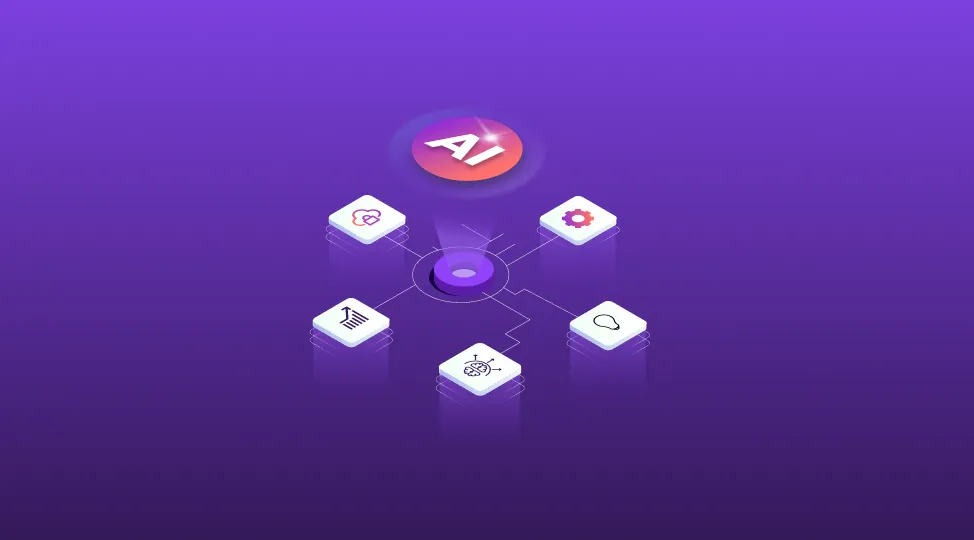
How to Build Agentic AI Systems – Frameworks, Tools & Tips...
Agentic AI is changing how businesses work by going beyond rule-based automation. In this guide, you’ll learn how it observes, decides, and acts in real time, the frameworks that power it, real-world use cases, and steps to build AI...
AI Agents vs. Agentic AI: What’s the Difference and Why It Matters
AI agents tackle defined tasks, while Agentic AI brings higher autonomy, collaboration, and adaptability to complex workflows. This guide explores their differences, real-world use cases, and the latest trends shaping enterprise AI ...
How to Build Agentic AI Systems – Frameworks, Tools & Tips...
Agentic AI is changing how businesses work by going beyond rule-based automation. In this guide, you’ll learn how it observes, decides, and acts in real time, the frameworks that power it, real-world use cases, and steps to build AI...
Trusted by Teams Moving AI Agents into Governed Production
Quokka Labs combines AI agent strategy, agentic architecture, enterprise integration, evaluation engineering, security, and AgentOps expertise to help product, data, engineering, and operations teams deploy agents that perform reliably across business-critical workflows.
0+
Years of Product Engineering
0+
End-to-End AI systems delivered
0+
Digital Products Shipped
0+
Industries Supported
Get Started
Ready to Operationalize AI Agents Across Your Workflows?
Engage Quokka Labs for AI agent consulting across strategy, architecture, enterprise integration, governance, evaluation, and production deployment - aligned with your infrastructure, risk posture, and measurable business objectives.
Response Within 24 Hours
Your request is reviewed by a senior AI architect with enterprise agent deployment expertise.
Clear Technical Direction
Receive actionable guidance on use-case feasibility, agent architecture, RAG, orchestration, security controls, integration scope, and deployment economics.
Production-Grade Delivery
Move from proof of concept to governed production deployment through structured engineering, evaluation, AgentOps, and continuous optimization.
Book Your AI Agent Assessment
FAQs AI Agent Consulting services
How do enterprises determine whether an AI agent use case is production-ready?
Assess workflow repeatability, data quality, API availability, decision risk, exception frequency, compliance exposure, and measurable ROI. Production-ready use cases should have clear execution boundaries, defined fallback paths, auditable outputs, and sufficient transaction volume to justify implementation and operating costs.
What should enterprises evaluate when comparing AI agent optimization consulting firms?
Compare their capabilities in agent evaluation, model routing, RAG optimization, latency reduction, token-cost control, observability, security testing, and failure analysis. Strong AI agent optimization consulting firms should benchmark task success, groundedness, tool-call accuracy, escalation rates, and production economics—not only prompt quality.
When should a company use a single agent versus a multi-agent architecture?
Use a single agent for bounded workflows with limited tools and decision paths. Multi-agent architecture is appropriate when processes require specialized roles, parallel execution, complex delegation, or independent validation. Excessive agent decomposition can increase latency, orchestration overhead, failure points, and infrastructure cost.
What do enterprise AI agent deployment consultants address before production rollout?
Enterprise AI agent deployment consultants define identity controls, system integrations, evaluation thresholds, observability, audit logging, human approvals, fallback mechanisms, data boundaries, and incident-response procedures. They also validate scalability, inference economics, model portability, and operational ownership before agents access production systems.
How is AI agent ROI calculated beyond headcount reduction?
ROI should include cycle-time reduction, higher transaction throughput, improved resolution accuracy, lower error rates, reduced support escalation, faster decision-making, and increased service availability. Enterprises should also account for inference costs, integration maintenance, human oversight, observability, security, and ongoing model optimization.
How should healthcare and ecommerce companies select an AI agent consultancy?
Top custom AI agent consultancies for healthcare and ecommerce should demonstrate domain-specific workflow expertise, secure data integration, human-in-the-loop controls, and measurable evaluation frameworks. Healthcare requires privacy and clinical-risk safeguards, while ecommerce demands low-latency orchestration, personalization, catalog grounding, and transaction-safe integrations.
How can startups avoid vendor lock-in when deploying AI agents?
Adopt model-agnostic orchestration, standardized tool interfaces, portable retrieval pipelines, independent evaluation datasets, and modular infrastructure. Separate prompts, business rules, memory, observability, and model providers so the agent can switch foundation models or cloud platforms without requiring a complete architectural rebuild.












.webp)